

Independently Tested Reliability of Form 4 and Other Resin 3D Printers
March 17, 2026Case StudyCustomer: MOSOLFIndustry: AutomotiveTechnology: Formlabs SLS
March 18, 2026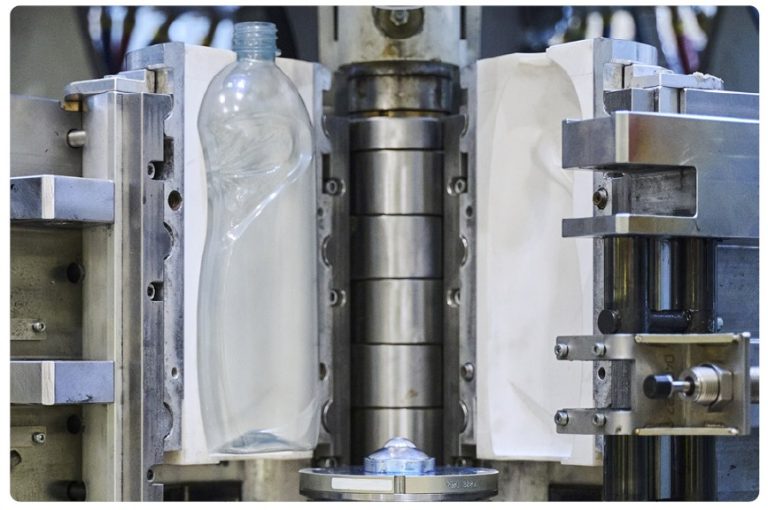
Independently Tested Reliability of Form 4 and Other Resin 3D Printers
March 17, 2026Case StudyCustomer: MOSOLFIndustry: AutomotiveTechnology: Formlabs SLS
March 18, 2026Independently Tested Reliability of Form 4 and Other Resin 3D Printers
March 17, 2026Case StudyCustomer: MOSOLFIndustry: AutomotiveTechnology: Formlabs SLS
March 18, 2026 As one of the world’s largest fast-moving consumer goods (FMCG) companies, Unilever is constantly developing new products for everyday use, from personal care to home care, nutrition, and more. It’s quite likely that you have one or more of their products in your home right now, given that the company owns Dove, Domestos, Cif, Knorr, Axe (Lynx), Ben & Jerry’s, and dozens of other global and local brands.
FMCG is an industry in which constant consumer demand drives fierce competition, so brands have to continuously innovate and adapt their product strategy. One important area of innovation is packaging; the design of a bottle can sometimes affect customer perception as much as what’s inside. Brands like Unilever have to consider material usage, aesthetic appeal, safety, and sustainability for a vast catalog of packaging types and the products they hold. But for a “simple” plastic bottle, getting from a design on the computer screen to filling it on the manufacturing line has traditionally taken many months.
The Traditional Workflow for Developing and Testing New Bottle Designs
Plastic products such as food and beverage containers, cosmetic packaging, and medical packaging are most commonly produced with blow molding, a group of long-established rapid mass-production methods for high-quality, thin-walled parts. Blow molding has very short cycle times, typically between one and two minutes, and is extremely cost-effective for high-volume production. It is usually employed for producing millions of identical parts at low unit costs.
Blow molding works by inflating a heated plastic tube, called parison or injected preform, inside a mold until it forms into the desired shape. There are three types of blow molding processes: extrusion blow molding (EBM), injection blow molding (IBM), and stretch blow molding (SBM). SBM is commonly used to produce high-quality glass clear PET containers such as water bottles.
Serioplast Global Services, founded in Seriate (Bergamo) in 1974, is a global producer of rigid plastic packaging for the FMCG industry and is one of Unilever’s major partners for developing and producing packaging for the home and personal care market. “We produce four billion bottles per year in PET, HDPE, and PP materials,” said Migliarelli.