

Case StudyCustomer: UnileverIndustry: Consumer Packaging Technology: Formlabs SLA
March 18, 2026Case StudyCustomer: Stratasys DirectIndustry: ManufacturingTechnology: PostProcess
June 10, 2026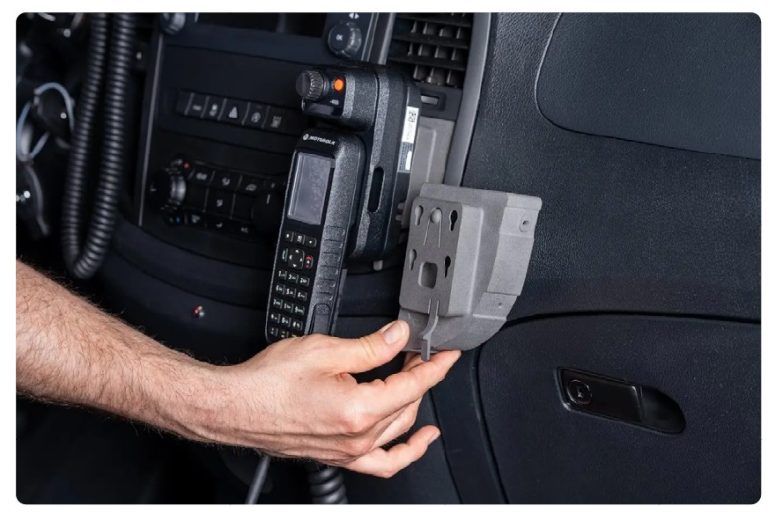
Case StudyCustomer: UnileverIndustry: Consumer Packaging Technology: Formlabs SLA
March 18, 2026Case StudyCustomer: Stratasys DirectIndustry: ManufacturingTechnology: PostProcess
June 10, 2026Case StudyCustomer: UnileverIndustry: Consumer Packaging Technology: Formlabs SLA
March 18, 2026Case StudyCustomer: Stratasys DirectIndustry: ManufacturingTechnology: PostProcess
June 10, 2026 MOSOLF Special Vehicles GmbH is a leading special vehicle manufacturer based in Kippenheim, Germany. With close to 50 employees, the company produces around 1000 special and emergency vehicles per year. Among their customers are the German state and federal police forces, the defense sector, disaster control and technical relief organizations, municipalities, and industrial customers, all of whom require vehicles with high degrees of customization and advanced performance.
In the automotive industry, most parts are manufactured through mass production processes like injection molding, which are cost-effective for standard production runs of hundreds of thousands of units. MOSOLF’s clients, however, require a diverse range of custom and low-volume parts, where tooling costs render traditional manufacturing methods economically unfeasible. For MOSOLF, 3D printing presents an ideal solution.
“Our biggest challenge is the variety,” says Busam. Each state and branch of the police force purchases several different types of vehicles — and each individual vehicle can then require customized features depending on its specific purpose. The components that have to be built in also vary — for example, different forces use radio or signaling systems from different manufacturers. This means that each vehicle requires a large quantity of custom parts.
“We manufacture vehicles for 17 police forces in Germany and everyone has their own idea of what the ergonomics should look like and how they want it to be operated. Accordingly, the quantities are usually comparatively high when it comes to the basic design, but when you add the degree of customization, they are small again,” said Busam.
MOSOLF’s team builds on series vehicles, which means that they take commercially available cars, trucks, and vans, and retrofit them to spec. The team has to find the appropriate installation location for each requested feature and make sure that it’s ergonomic, durable, and aesthetic. In older models, finding installation sites was easier — they have multiple empty spaces within a dashboard or console for MOSOLF to adapt. Newer models have proven to be a challenge.